
All Posts
6 min read
Financing in Business: Debt, Equity and Smarter Ways to Fund Growth
Published on 1 September 2026
Business finance is the process of raising and managing funds to cover working capital, purchase assets, and grow operations. For UK SMEs - businesses with fewer than 250 employees - financing decisions touch everything from paying staff and buying stock to opening new locations and entering export markets.
Most companies use a combination of debt financing and equity financing rather than relying on a single source. The mix depends on cost, availability, control preferences, and where the business sits in its lifecycle. Whether you run a limited company in Sheffield or a sole trader operation in Cardiff, understanding your financing sources is essential.
This article moves from core concepts to specific funding options across both debt and equity, then explains how platforms like FundingSearch streamline access to commercial finance for UK businesses, brokers, and advisers.
Debt Financing vs Equity Financing: Core Concepts
Consider a Birmingham-based manufacturer that needs £250,000 to expand its factory. Two paths exist. The business could take a bank loan of £250,000 repayable over five years. Or it could sell a 20% equity stake, implying a company valuation of £1.25 million.
Debt financing is a common form of business financing that involves borrowing money to be repaid with interest over time, unlike equity financing, which involves selling shares in your business. The lender has no ownership claim. Equity financing involves selling shares in your business. Investors receive ownership stakes in exchange for their investment and become part owners of the company.
Here is where the two diverge most sharply:
- Ownership and control: Debt financing allows companies to retain ownership and control. Equity brings co-owners - often venture capitalists or angel investors - who may want board seats and a say in strategy.
- Cash flow in months 1–24: Debt requires monthly payments of principal plus interest from day one. If revenue lags, those obligations still stand. Debt financing creates financial obligations that must be met even during weak sales periods. Equity financing does not require repayment but relinquishes ownership stakes, so there is no fixed cash outflow - but investors expect growth and eventually an exit.
- Cost: Debt financing is often cheaper than equity financing due to lower interest rates, and interest on debt is often tax deductible for businesses. Equity can be far more expensive in the long run if the company grows rapidly, because the founder has permanently given up a share of future profit.
Debt preserves control, requires collateral or personal guarantees, and suits businesses with predictable revenue. Equity removes fixed repayment pressure, brings expertise and capital, but dilutes the founder's share.

How Business Financing Works in Practice
A typical UK SME funding journey might look like this across four years:
- 2024 (launch): The founder uses personal savings and friends-and-family money to build a prototype. A small overdraft covers early business expense items. Bootstrapping refers to using personal savings or early sales revenue to fund a business, and most founders start here.
- 2025 (early revenue): The company lands its first contracts. It takes out a term loan for equipment and begins using invoice financing to free up cash tied in receivables.
- 2026 (growth): Revenue climbs. The business secures angel investment to fund a sales team. Adequate financing supports talent acquisition by allowing businesses to hire skilled professionals. It also takes asset finance for a delivery fleet.
- 2027–2028 (scale-up): The company pursues a larger equity round or private equity deal to enter European markets, while a commercial mortgage funds new premises.
Financing options impact business growth by enabling expansion and managing risks at each stage. Funding enables investment in resources that can enhance productivity and reduce costs.
Banks dominate term debt and overdrafts. Alternative finance providers supply faster unsecured or semi-secured lending. Business angels and venture capital firms provide equity. Commercial finance brokers act as intermediaries, matching businesses with lenders.
The principle is simple: match the repayment profile to the asset's useful life. A five-year machine should be financed over five years, not via a 30-day overdraft.
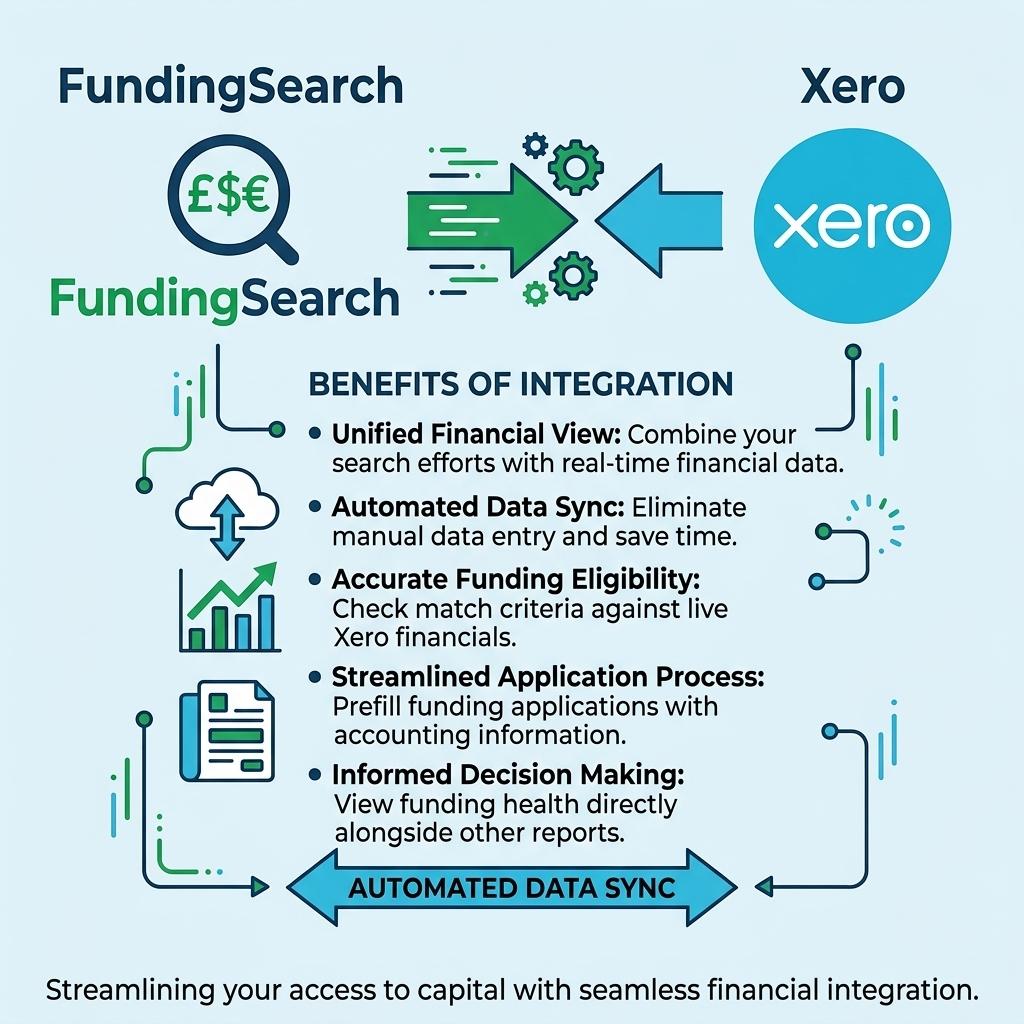
Modern platforms like FundingSearch use verified financial data from tools like Xero and Sage, combined with AI matching algorithms, to pair businesses and brokers with suitable lenders across multiple product types - reducing paperwork, time, and mismatch costs.
Understanding and Managing Cash Flow
Cash flow stability is crucial for maintaining daily operations and meeting financial obligations. A business can show a healthy profit on paper and still fail if cash is tied up in stock or receivables while bills come due.
Common UK SME pressure points include:
- Quarterly VAT payment deadlines
- Monthly payroll obligations
- Seasonal sales dips (summer lulls, post-Christmas slowdowns)
- Customers who pay on 60- or 90-day terms
Here is a concrete example. Suppose your business has £100,000 in outstanding invoices averaging 60 days to collect, but suppliers demand payment in 30 days and payroll is due monthly. That 30-day gap must be funded from reserves or borrowing. Invoice finance might release 80–90% of invoice value immediately - turning £100,000 of receivables into £80,000–£90,000 of working cash. Invoice financing allows businesses to borrow against outstanding customer invoices for quick cash access.
Overdrafts and working capital loans also relieve short term financing needs, and in some cases emergency business loans for urgent cash flow gaps can provide rapid support when unexpected costs arise. The key is bridging cash flow gaps without taking on unnecessary long-term debt.
Every lender and investor will scrutinise your historical and forecast cash flow when assessing any financing request. Expect them to stress-test scenarios: what happens if revenue drops 20%? What if your biggest customer pays late?

Types of Debt Financing for UK Businesses
Debt financing is the most common type of financing for SMBs. According to the Bank of England, effective interest rates for new loans to SMEs were around 6.36% annualised as of June 2026. SME debt as a share of UK GDP has fallen from roughly 13% in 2011 to about 8% in 2024, reflecting tighter supply and changing demand.
Here are the main debt products available to UK businesses:
- Term business loans - Fixed amounts (typically £50,000–£5m) repayable over 1–7 years. Best for capital investment: machinery, IT systems, premises fit-outs. Traditional bank loans typically feature the lowest interest rates and predictable payments. Lenders require security such as fixed charges on assets or director guarantees. For unsecured options, expect higher rates.
- Commercial mortgages - Loans for purchasing or refurbishing trading premises, with terms of 10–25 years. Security is the property itself. Suited to established businesses with a strong trading history or solid rental income projections.
- Asset finance (hire purchase and leasing) - For acquiring specific equipment, vehicles, or other assets. Hire purchase transfers ownership at the end; leasing may not. Useful for preserving capital and matching cost to the useful life of the asset.
- Invoice finance - Factoring (lender manages your receivables) or discounting (you maintain control). Ideal when your balance sheet shows large receivable balances or customers on long payment terms.
- Trade finance and export finance - Letters of credit, performance bonds, and import finance for international transactions. Reduces payment risk and currency risk for businesses trading overseas.
- Overdrafts and revolving credit facilities - Business lines of credit are revolving credit facilities allowing borrowing as needed. Good for ongoing cash flow management and seasonal fluctuations, and some specialist lenders will even consider business loans for companies with bad credit. Interest is typically variable and often higher than term loans. Overdrafts may be callable on demand.
- Bridging finance - Short-term property or deal-related funding, typically weeks to months. Useful when speed is essential, such as securing a property at auction, whether for commercial premises or residential bridging loans for owner-occupied property. Bridging loan options can be explored quickly via marketplace platforms.
Lenders may require collateral for debt financing, including personal guarantees, debentures, and fixed or floating charges over company assets. Pricing varies by credit risk, loan size, and sector.
FundingSearch covers seven main commercial finance asset classes and can route one application to multiple suitable lenders, helping brokers and SMEs compare pricing and terms efficiently.
Types of Equity Financing and When to Use Them
Equity finance is usually used for higher risk, early stage, or scale-up businesses that prioritise growth over short-term profit. Equity financing can provide technical and managerial support from investors alongside capital.
Common equity financing routes include:
- Angel investment - High-net-worth individuals investing their own money, typically at pre-seed or seed stage.
- Venture capital - Institutional fund-backed investors deploying larger sums in Series A, B, and C rounds. Venture capital provides large sums of capital for high-growth companies but may dilute ownership significantly.
- Private equity - Later-stage investment, often involving buy-outs or major expansion capital. Tickets are large and ownership transfer is significant.
- Equity crowdfunding - A regulated online platform approach allowing many businesses to raise money from many small investors. Crowdfunding allows businesses to raise money from many small investors.
- Strategic corporate investment - Corporates investing for supply chain, technology, or partnership reasons.
Typical funding stages and approximate ranges:
- Pre-seed: £25,000–£250,000
- Seed: £250,000–£2m
- Series A: £2m–£10m+
- Series B/C and beyond: £10m+
In 2024, UK smaller business equity investment totalled approximately £10.8 billion across around 2,048 deals, according to the British Business Bank's Small Business Equity Tracker 2025. By 2025, AI-related companies accounted for a record 44% of the total equity investment value.
Investors usually expect board seats or observer rights, information rights, and an exit in 5–10 years - whether through sale, acquisition, or an initial public offering. Venture capitalists often seek significant returns on their investments, sometimes targeting 10x or more.
The trade-off is clear: selling shares dilutes your equity stake and control, but you gain patient capital with no fixed repayment burden, plus access to expertise and networks.

Angel Investors and Business Angels
Business angels are high-net-worth individuals who invest their own money into early stage businesses. Angel investors typically invest 10% to 25% for equity stakes, and angel investors typically take a 10% to 25% stake in businesses depending on the round and valuation.
Individual cheque sizes commonly range from £10,000 to £50,000, but many UK angel deals are done via syndicates or networks where aggregate rounds can reach £1 million or more. According to written evidence submitted to Parliament, angel investment currently amounts to approximately £1.5 billion per annum into UK small businesses at their early stages.
Businesses that attract angels typically have a clear problem they solve, a prototype or proof of concept, early revenue or traction, and a strong founding team.
Beyond money, business angels bring sector experience, contacts, help with recruitment, and introductions to later-stage venture capital investment rounds. This non-financial value is often as important as the capital itself.
UK tax reliefs through the Seed Enterprise Investment Scheme (SEIS) and Enterprise Investment Scheme (EIS) offer income tax and capital gains relief to qualifying investors. In past surveys, 83–87% of angels used EIS in at least one investment in a given tax year, making these schemes a significant driver of early stage deal flow.
Equity Crowdfunding and Alternative Sources of Equity
Equity crowdfunding lets new companies and growing businesses raise capital by offering equity to a large number of individual investors through an online platform. This is distinct from donation or reward-based crowdfunding, where backers receive products or perks rather than an equity stake.
It works best for B2C brands with strong communities, consumer products that resonate with the public, and businesses with traction seeking £100,000–£2m.
The process at a high level:
- Prepare a pitch deck, financial statements, and projections
- Seek HMRC advance assurance for SEIS/EIS eligibility if applicable
- Pass platform due diligence
- Launch campaign with minimum and maximum funding targets
- Close the round and manage investor relations
Equity crowdfunding is one of several alternative sources of equity alongside family offices, niche sector-focused funds, and university spinout programmes. Key considerations include public disclosure of financial information, managing a large cap table with many small shareholders, ongoing investor communications, and regulatory compliance under UK financial regulations.
Choosing Between Debt Finance and Equity Finance
The choice of financing type depends on business growth stage, cash flow, and control preferences. Here is a practical decision lens:
- Profitable manufacturer buying a £300k CNC machine: Predictable revenue, tangible asset as security. Debt (asset finance or hire purchase) is the natural fit. The business keeps full ownership, can pay interest from existing margins, and the remaining balance reduces over the loan term.
- Loss-making SaaS scale-up hiring a sales team: Negative cash flow, high growth potential, no physical assets. Equity (angel or venture capital) is better suited. Fixed monthly payments would cripple growth.
- Retail chain opening a new location: Volatile revenue forecast, high upfront fit-out costs. A hybrid works well - commercial mortgage for premises, plus equity crowdfunding or revenue-based finance for working capital.
- Service business with stable cash flows: Modest growth, founder wants to retain control. Lean toward debt and retained earnings. Use equity only if strategic investor input is essential.
Debt financing is typically cheaper than equity financing when measured by the close interest cost alone. But the true cost of equity is the share of future profit and market share you hand over permanently. Many businesses pursue hybrid solutions - modest bank debt for assets plus angel investment for growth - so founders can raise money without unnecessary dilution.
Platforms like FundingSearch focus on sourcing the right commercial debt so founders can minimise equity dilution unless it genuinely adds strategic value.
Early Stage Funding: From Start-Up to Scale-Up
The funding path for a typical early stage UK business follows a rough sequence:
- Bootstrapping and friends/family - Using personal savings, credit cards, or small contributions from close contacts. Often under £50,000.
- Pre-seed grants and small loans - Government grants provide funding that does not require repayment and can support specific projects such as R&D. In the US context, SBA loans offer flexible terms for small businesses lacking collateral; UK equivalents include Start Up Loans and British Business Bank-backed schemes.
- Angel investment - Seed-stage capital from individuals or syndicates, combined with SEIS/EIS tax reliefs.
- Seed and early venture capital - Larger rounds for product-market fit and scaling.
- Growth loans and asset finance - Once revenue and assets exist, term loans and commercial mortgages become accessible and cost-effective.
Each stage maps to changing business needs: product development at pre-seed, first hires at seed, marketing and international expansion at Series A and beyond.
Early documentation matters. Proper bookkeeping through accounting software like Xero or Sage, timely management accounts, and clean financial statements make it dramatically easier to secure both debt and equity later. FundingSearch's verified financial data integrations can help once the business is mature enough to seek commercial lending alongside equity, directly supporting the FCA’s broader vision for transforming SME lending with data and AI.

Regional and Sector-Specific Business Finance in the UK
Where you operate and which sector you trade in can influence available finance. UK businesses outside London increasingly have access to regional development funds: the Northern Powerhouse Investment Fund, Midlands Engine Investment Fund, Scottish National Investment Bank, and Development Bank of Wales all provide both debt and equity with more flexible security terms.
In 2025, equity investment grew in the North West, South West, and Scotland, showing that raising capital is no longer exclusively a London activity.
Sector also shapes product choice. Manufacturing and construction firms with tangible assets lean on asset finance, equipment leasing, and commercial mortgages. E-commerce and tech firms - asset-light by nature - rely more on venture capital, revenue-based finance, or convertible notes. Professional services businesses with strong receivables often use invoice finance and smaller working capital loans.
Specialist lenders focus on particular asset classes or sector risk profiles, which is exactly why broker-lender marketplaces like FundingSearch exist - to match the right lender appetite to the right borrower profile across multiple sectors and regions.
Consider regional incentives, sector-targeted government grants, and local angel networks as part of a broader funding strategy.
Alternative Sources of Business Financing
"Alternative finance" now covers a wide range of non-bank, non-traditional options. Many businesses turn to these when mainstream bank lending is too slow, too rigid, or simply unavailable.
- Online lenders / fintechs - Faster application process, often lighter security requirements. Good for unsecured working capital needs.
- Revenue-based financing - Repayments tied to a percentage of revenue. Suits businesses with recurring income like subscriptions or SaaS.
- Merchant cash advances - A lender advances a lump sum in return for a share of future card sales. Quick access but expensive, as explained in our complete guide to merchant cash advances.
- Peer-to-peer lending - Platforms connecting individual lenders with borrowers. Potentially competitive rates for smaller amounts, with specific peer-to-peer lending benefits for SMEs around speed and diversification.
- Community Development Finance Institutions (CDFIs) - Serve businesses underserved by mainstream financial institutions. May accept weaker credit histories and provide mentoring.
- Supply chain finance - Large buyers help suppliers access finance through invoice discounting, improving cash flow across the chain, in a similar way to small business factoring and receivables finance.
The pros are speed, flexibility, and lighter security. The cons are higher interest rates, complex fee structures, and risk to cash flow if revenues drop. Some products can be time consuming to compare without expert help.
FundingSearch connects brokers and SMEs to a wide universe of UK bank and non-bank lenders, helping them compare these alternative sources alongside mainstream options through a single application.
How Lenders and Investors Assess Your Business
Successful business financing depends on meeting clear criteria - not just having a good idea. Whether you are approaching banks or selling shares to an investor, assessment follows similar pillars:
- Financial performance - Revenue trends, profit margins, growth trajectory
- Cash flow stability - Recurring income, debtor and creditor cycles, seasonality
- Balance sheet strength - Assets, liabilities, net worth, available collateral
- Credit history - Business and personal credit records of directors
- Sector risk - Regulatory environment, competition, market conditions
- Management experience - Track record, governance, ability to execute a business plan
Key documents to prepare: two to three years of audited accounts, recent management accounts, cash flow forecasts (12–24 months), aged debtor and creditor lists, bank statements, and a clear business plan. All the risk assessment starts with robust data.
Verified financial data through open finance connections improves trust and speeds up underwriting. When a lender can see real-time, reconciled data from Xero or Sage rather than manually uploaded spreadsheets, confidence rises and risk premiums can fall, which is exactly how open banking is transforming SME business finance.
FundingSearch uses AI matching algorithms and integrated financial data to present cleaner, pre-qualified deals to lenders - increasing the chance of approval and better terms, closely aligning with the FCA’s open finance vision for SME lending.
Building a Financing Strategy and Using Marketplaces Like FundingSearch
Many businesses only think about finance when cash runs short. A better approach is strategic: plan your funding needs before they become urgent.
A simple process:
- Define business needs clearly - exact amount, purpose, timeline
- Map asset life to finance term (five-year machine = five-year loan, not a 90-day overdraft)
- Decide on debt, equity, or a mix based on dilution tolerance, cash flow, and risk
- Benchmark offers across multiple lenders to find competitive interest rates and fees
- Monitor covenants and cash flow monthly
- Review your financing strategy annually as the business matures
Commercial finance brokers play a valuable role here. They understand the lender landscape, negotiate terms, interpret small print, and help businesses sell their story to the right audience.
A digital deal origination platform such as FundingSearch supports brokers, accountants, and SMEs by centralising applications, performing smart lender selection across seven asset classes, and reducing duplicate data entry. The result is faster access to funds, better-matched products, and less wasted effort on both sides.
An ongoing relationship with finance providers - supported by transparent data and the right technology - gives businesses faster access to capital as they grow.
Key Takeaways: Making Business Finance Work for You
- Cash flow drives survival. Understand your payment cycles, debtor terms, and seasonal patterns before choosing any financing product.
- Debt financing preserves ownership but demands regular payments. Equity financing removes repayment pressure but costs you an equity stake and governance influence. Most companies use a combination of both debt and equity financing.
- Match funding to purpose. A five-year asset needs five-year finance, not a credit card. Short-term stock needs a revolving facility, not a long-term loan.
- Prepare robust financial information early. Clean books, verified data, and realistic forecasts increase your chances of approval and better terms from any lender or investor.
- There is no single "best" type of business finance. The right mix changes over time as your company matures, your asset base grows, and your growth ambitions evolve.
- Fintech, open finance, and AI-driven platforms are giving SMEs and advisers faster, fairer access to commercial finance. The application process that once took weeks can now take days.
If you are a small business owner, broker, or adviser exploring financing options, speak with your accountant or commercial finance broker and use a platform like FundingSearch to explore a broad range of UK lenders and alternative sources efficiently. The information in this article is intended for general information purposes - always seek professional advice tailored to your specific circumstances.