

All Posts
4 min read
Pub Finance: Smart Funding Options For UK Pubs And Bars
Published on 21 September 2026

Introduction: Pub Finance In Today's UK Market
The UK pub industry remains a cornerstone of community life and commerce, yet the sector faces sustained pressure. The UK pub sector generated almost £15 billion in sales in 2021, and the beer and pub industry contributed £23.1 million to the economy annually in 2017. But the landscape has shifted dramatically. Over 20,000 pubs have closed in the UK since 2000, with approximately six pubs closing every week today. In 2018, an average of 18 pubs shut down weekly. By 2024, around 45,000 pubs remained, down from over 60,800 at the millennium.
Rising energy bills and staff costs are major challenges for pubs. Net margins for a typical wet-led pub business have fallen from roughly 8.5% pre-COVID to around 3.0% in 2024, squeezed by utility bills that roughly doubled, wages that climbed sharply (the national minimum wage rose by up to 18% in April 2025), and punishing business rates. These ongoing costs are compounded by food and drink input price inflation running ahead of what pub owners can realistically pass on to customers.
Much of this pressure flows from broader government fiscal decisions. Public finance evaluates government income and expenditure, and governments use tax systems and social welfare for resource redistribution. Public revenue includes taxes and non-tax receipts, while public expenditure refers to government spending on goods and services. Fiscal policy aims to stabilize the economy using government spending and taxes, and public finance plays a role in economic stabilization policies during recessions. For pubs, this means business rates, VAT, alcohol duty, and employer NICs are all direct consequences of how public financial management governs how governments plan and execute budgets. A fiscal deficit occurs when expenditures exceed revenue, and public debt arises when the government borrows to finance deficits. Fiscal sustainability means managing debt levels without excessive burdens, while fiscal balance measures the difference between government revenue and expenditure. Transparent budgeting fosters confidence and accountability in public finance, and efficiency in public finance ensures resources are directed toward public goods. Public finance impacts budgeting by aligning spending with community needs, yet many pubs feel the weight of these decisions in their day to day operations.
Pub finance, in practical terms, covers every funding option available to buy a pub, refurbish premises, manage cash flow, or expand an existing business. This article is aimed at UK limited-company operators and prospective bar owners, as well as the brokers and advisers who serve them. FundingSearch is a UK commercial finance marketplace that connects hospitality businesses and brokers with lenders across business loans, commercial mortgages, invoice finance, asset finance, and more.
Key pub funding challenges include:
- Seasonality of income with sharp peaks and troughs
- Card-heavy revenue and associated processing costs
- Tied leases that restrict purchasing and reduce margins
- Inflation on energy, food, labour, and stock
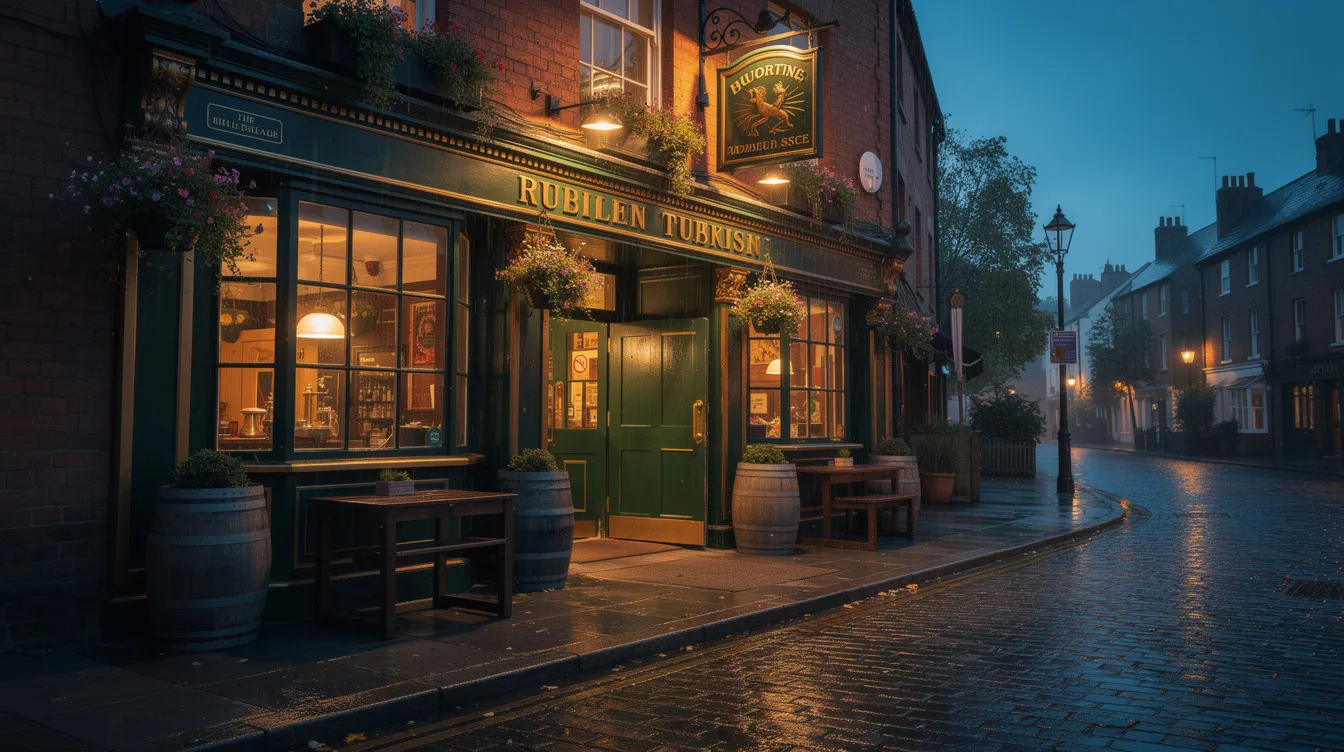
Buying A Pub: Loans For Pubs Vs Commercial Mortgages
If you want to buy a pub, the route you take depends on whether you are purchasing the pub freehold (the commercial property itself), acquiring a leasehold interest, or taking on a tenancy with a pub-owning company like Punch, Greene King, or Star Pubs. Each route demands a different finance structure. Franchise funding can start at £25,000 for major pub brands, making tenancy the lowest-cost entry point, while buying a freehold typically requires a commercial mortgage.
A commercial mortgage is used when you are buying the premises outright, often with living accommodation above. Commercial mortgages typically require a minimum deposit of 25%, with most lenders preferring 30–40% for pub purchases. Unsecured or secured business loans suit situations where you are buying the business only, paying a premium for a lease, or funding the purchase price of goodwill and stock.
Here is how the two main options compare:
| Factor | Pub Loans (Secured/Unsecured) | Commercial Mortgage |
|---|---|---|
| Security | Personal guarantees or business assets | Property itself |
| Property itself | 1–7 years | Up to 25 years |
| Deposit | Lower or none (unsecured) | 25–40% |
| Interest rates | Higher interest rates | Lower, fixed or variable |
| Best for | Lease premium, stock, fit-out | Freehold or long leasehold purchase |
FundingSearch helps brokers and borrowers compare different pub loans and commercial mortgage options side-by-side through one application process, saving time and avoiding dead-end submissions, and operators who want to go deeper on property funding can explore our complete guide to commercial mortgages in the UK.
Commercial Mortgage Options For Pubs
A commercial mortgage is central to pub finance whenever you are purchasing premises or refinancing existing debt. Most lenders offer loan-to-value ratios of 60–70% for pubs, with mixed-use structures (pub with owner's accommodation) sometimes qualifying for slightly more favourable terms.
Key uses include buying a pub freehold, refinancing an existing loan to reduce repayments, funding major refurbishments, or consolidating expensive short-term debts. Commercial mortgages are typically repaid over 25 years, making monthly repayments manageable relative to a shorter-term loan. Lenders will look closely at the last 2–3 years' filed accounts, EBITDA, barrelage and turnover split between wet, dry, and accommodation income, and the overall business performance of the venue.
FundingSearch's AI-driven engine helps brokers identify which commercial mortgage lenders are open to pubs, mixed-use premises, or turnaround situations, filtering out lenders who don't have appetite for the pub trade.
What you'll usually need to apply:
- Last 2–3 years' statutory accounts
- 3–12 months' business account bank statements
- Management accounts and cash flow forecasts
- Details of any tied lease obligations
- Personal asset and liability statements for directors
Finance Solutions For Initial Fit‑Out And Refurbishment
New operators frequently underestimate the capital needed to refurbish kitchens, bars, cellars, beer gardens, and accommodation when they buy a pub. The money required to refurbish premises and install kitchen equipment can easily exceed the purchase price of the business itself.
Asset finance helps pubs spread costs of new equipment over time, and asset finance allows pubs to purchase equipment using the asset as security. This means you can invest in a new kitchen range, cellar cooling, EPOS systems, or outdoor furniture without draining your working capital. Crowdfunding can provide funds without requiring repayment if used as promised, though this suits community-focused projects more than routine fit-outs.
Common refurb items and suitable finance:
- Kitchen equipment, cellar cooling, AV systems → asset finance
- General fit-out, décor, beer garden → unsecured business loan or lump sum term loan
- Late-stage finishing touches → merchant cash advance
- Major structural work → included within a commercial mortgage facility
Staging the funding mix (property via mortgage, kit via asset finance) protects cash flow in the first 12–24 months. FundingSearch allows brokers to build multi-product cases for a single pub transaction in one workflow, using finance sourcing software for multi-product brokers to coordinate mortgages, asset finance, and working capital in a single place.

Managing Ongoing Operating Costs And Cash Flow
Cash flow is the single biggest source of stress for any pub landlord. Weekly payroll, buying stock, energy direct debits, rent, and business rates all hit the business account on fixed dates, while revenue fluctuates by day, week, and season. For a successful pub, managing the gap between money in and money out is non-negotiable.
Working capital facilities such as overdrafts, revolving business loans, and lines of credit help smooth weekly and monthly swings in income. Cash flow loans help pubs during seasonal downturns, and cashflow loans help pubs manage seasonal revenue fluctuations, ensuring there is enough cash to pay staff and suppliers even when trade dips.
A merchant cash advance is particularly well suited to card-heavy pubs. Repayments are automatically deducted as a small percentage of daily card transactions, so quieter months don't cause repayment stress. This aligns repayments with the pub's actual revenue rather than a fixed schedule.
Practical cash flow management tips:
- Track weekly sales by daypart and season
- Record all recurring costs (rent, utilities, loan repayments, stock levels)
- Plan for HMRC liabilities (VAT, PAYE, corporation tax) monthly
- Build a buffer of at least 4–6 weeks' operating costs
FundingSearch connects to Xero or Sage to let brokers and lenders see real transaction data via open banking-powered business finance, improving affordability assessments and speeding up approvals for working capital facilities.
Seasonality, Events And Cash Flow Planning For Pubs
Seasonal businesses like pubs face dramatic swings. Christmas, bank holidays, and sports tournaments (Six Nations, Euros, World Cup) drive peaks, while January and mid-week periods in commuter towns can be painfully quiet. Pubs in tourist areas, student towns, and city centres each have different seasonality patterns and need tailored finance strategies.
Seasonal cash flow management is vital for pub success. Flexible finance options help manage cash flow during quiet months, preventing a cash crisis from becoming a solvency crisis.
Seasonality best practices:
- Monitor footfall, average transaction value, and card sales versus cash split monthly
- Track weather impacts, local events, and booking patterns for functions
- Arrange short-term business loans or a flexible line of credit before a predicted quiet season, not during it
- Use a merchant cash advance to borrow against future card sales ahead of a major event, funding extra stock and temporary staff
- Review historical accounts to identify your three weakest and three strongest months, then plan repayments around them
A broker using FundingSearch can quickly test multiple funding options for a pub several months before a predicted dip, using verified accounting data and commercial finance broker software to support the case.
Key Pub Finance Products Explained
Not every pub needs every product. The right loan and the right mix depend on your stage and strategy. All of the following product types are represented on the loan origination marketplace FundingSearch platform and can be filtered by brokers by deal size, sector, and risk profile.
Business loans: Pubs can borrow up to £500,000 through unsecured business loans, with terms from 12 to 72 months. Secured loans use hard assets or property as collateral and typically offer lower interest. Suitable for refurbishment, marketing campaigns, or buying out a partner. Traditional bank loans remain an option but often move slowly.
Merchant cash advance: Merchant cash advances provide funds based on future card sales. A lump sum is advanced, and repayments are automatically deducted as a fixed percentage of daily card transactions. Merchant cash advances allow repayments based on daily card sales, making them useful for a new food menu launch or buying stock for events.
Invoice finance: For pubs with function rooms, catering, or B2B contracts (corporate events, wedding venues, outside catering), invoice finance unlocks cash tied up in invoices paid on 30–60 day terms.
Asset finance and ABL: Asset-based lending uses hard assets like property, vehicles, or high-value equipment to raise capital, especially for multi-site operators looking to invest in growth.
Bridging finance: For time-sensitive acquisitions where you need to move quickly on a freehold, bridging loans provide short-term access to money before refinancing to a commercial mortgage.
Debt finance broadly: Whether secured or unsecured, debt finance remains the most common route for pub finance solutions in the UK.
Eligibility, Affordability And The Application Process
Lenders in 2025–2026 expect a pub or bar to demonstrate trading history, profitability (or credible forecasts), management experience, and a clear purpose for borrowing. Business plans are essential for start-ups; experienced operators lean on their accounts.
Typical eligibility by product:
- Merchant cash advance: 6–12 months' card sales history
- Commercial mortgage: 2–3 years' filed accounts, strong EBITDA
- Unsecured loan: most lenders require at least 6 months of trading
- Start-up buying a pub: robust business plan, personal guarantees, relevant industry experience
A healthy credit score is beneficial but not mandatory. Many lenders in the pub trade take a broader view, weighing management experience and business performance alongside credit history.
Documents you'll typically need:
- Recent bank statements and tax returns
- Statutory and management accounts
- Card processing statements
- Licence details and business rates bills
- Personal asset and liability statements (if security or personal guarantees are involved)
The modern application process via a marketplace like FundingSearch works in stages: online data capture, consent to connect accounting software, automated lender matching, broker review, and lender underwriting, all supported by commercial lending software that automates origination workflows for lenders. Applications can be completed in under 5 minutes online, and funding can be received in your account within 24 hours for certain products. Verified financial data integration through Xero, Sage, and Companies House reduces manual paperwork and speeds up decisions.
Choosing The Right Funding Options For Your Pub Strategy
The cheapest rate is not always the right loan. Suitability depends on purpose, flexibility needs, and risk tolerance. A 25-year mortgage at a low rate is pointless if you only need to borrow for 12 months, and stacking multiple cash advance facilities can create dangerous repayment pressure.
Match your funding to specific goals: buy a pub with a commercial mortgage, refurbish with asset finance, cover a tax bill with a short-term loan, expand into food with a working capital facility, or add rooms with a blended package. Many pubs benefit from combining products rather than relying on a single lump sum.
Questions to ask before choosing a product:
- How long do I need this money for?
- What happens if trade drops 20%?
- Can I pay early without penalties?
- Does the repayment structure align with my income pattern?
- What additional costs (fees, valuations, legal) are involved?
- Am I comfortable with the level of personal guarantees or security required?
Brokers and advisers can use FundingSearch's smart lender selection to compare multiple finance solutions quickly, test different structures, and present flexible options to the pub owner in plain English, supported by expert guidance, all within the core SME lending deal origination platform.
How FundingSearch Supports Brokers, Advisers And Pub Operators
FundingSearch is a UK-based business and commercial lending platform launched in 2025 in Sheffield, focused on SMEs including pubs, bars, hotels, and hospitality groups. It is a B2B SaaS marketplace: brokers, accountants, and advisers log in to originate deals; lenders subscribe for pre-qualified, data-rich applications; borrowers benefit indirectly through better matching and faster responses.
The platform covers seven main commercial finance asset classes: business loans, commercial mortgages, bridging, invoice finance, asset finance, asset-based lending, and trade finance. This breadth is particularly useful when structuring complex pub finance packages that combine a mortgage with asset finance or a working capital facility.
AI matching algorithms score each pub deal against lender appetite across sector, geography, loan size, risk, and property type, reducing wasted applications and increasing approval odds. FundingSearch is not a direct lender. It powers smarter, faster pub finance via brokers and professional advisers.
Next Steps: Getting Pub Finance Quotes Through FundingSearch
Whether you need to buy a pub, refinance, refurbish, or stabilise cash flow, the starting point is preparation. A broker or adviser using FundingSearch creates a case, connects your accounting software, runs AI matching, reviews lender matches, and submits to selected funders.
Pub owners can get started by speaking to a commercial finance broker who uses FundingSearch, or by being referred through their accountant. Prepare your recent management accounts, card sales data, licence details, and a basic business plan now to speed up the application process.
The pub industry is under real pressure, but access to the right funding at the right time remains the difference between a pub that closes and a pub that thrives. FundingSearch is the central hub for sourcing commercial mortgages, business loans, asset finance, and cash flow facilities for pubs and bars across the UK.